
By Nivaldo Cleto*
ICANN87 came to a close in Bali after a week of discussions on security, domain name expansion and participation in Internet governance. As I conclude this series of daily reports, my main takeaway is that the decisive work continues after the meetings: turning proposals into effective mechanisms that work for businesses, citizens and authorities, with clear responsibilities and measurable results.
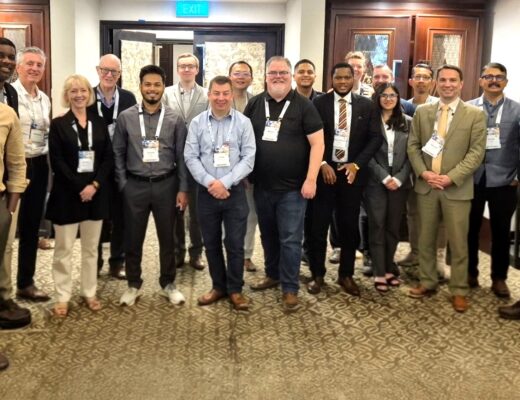
This concern was highlighted during the October 20 meeting between the ICANN Board of Directors[i], the Board[ii], and the Commercial Stakeholder Group (CSG)[iii], which includes the Business Constituency (BC)[iv]. The dialogue went beyond identifying problems and called for explanations of how the organization intends to address them.
Artificial intelligence was one example. Mason Cole highlighted the risks posed by faster and more convincing attacks, while clearly defining the business community’s request: to understand the technology’s impact on the Domain Name System, within ICANN’s mission. The proposal is to keep the issue on the agenda and assess whether the evolving threat landscape will require changes to priorities in abuse-mitigation policies.
The discussion also opened up a constructive perspective. Lori Schulman suggested that ICANN consider supporting the development of AI tools for smaller registries and registrars, which do not always have the resources available to larger operators. These tools could help them handle abuse reports and meet their obligations. This was a proposal for further consideration, with no funding decision announced at the meeting.
Another important development concerned the SSAD[v], a mechanism under discussion for requesting access to nonpublic domain registration data. Board representatives indicated support for a single point of entry that would also receive requests involving privacy and proxy services.
For those investigating fraud, the goal is to make it easier to determine where to direct a request. This does not mean automatic access to data: requests must be assessed and handled in accordance with applicable policies, and some cases may require specific procedures. The recommendations still depend on being finalized and adopted.
The call for greater transparency also raised an equally practical question: how can a policy be tracked after it reaches the Board? The business community requested clearer information about procedural stages, dependencies and progress estimates. It is not enough to announce that an issue is under consideration; the community must be able to understand what remains before a decision can be made and implemented.
The Board pointed to improvements in tracking mechanisms and acknowledged the limits of its implementation capacity. This discussion matters because the priority assigned to a problem during policy development must remain relevant when decisions about budgets, staffing and implementation are made.
For Brazilian business users, these developments have tangible consequences. A small business affected by a fraudulent domain needs accessible channels, appropriate handling of its report and clear responses. The quality of Internet governance is also measured by its ability to deliver this protection.
I conclude my participation in Bali convinced that representing the business sector means following this entire process. Brazil’s contribution continues through public consultations, working groups and scrutiny of results. The next step will be to assess how the commitments and proposals discussed this week translate into a more trustworthy Internet for those who depend on it every day.
*Nivaldo Cleto represents business Internet users on the Brazilian Internet Steering Committee (CGI.br) and is a member of ICANN’s Business Constituency.
Photos courtesy of ICANN Photos.