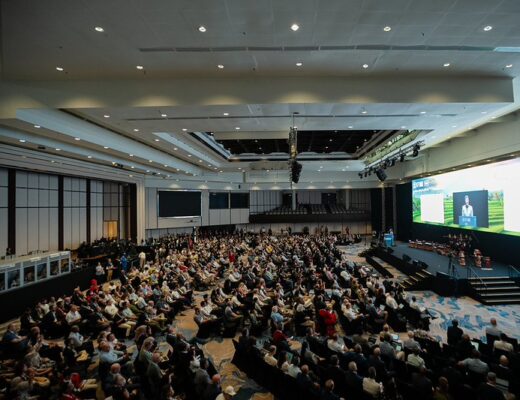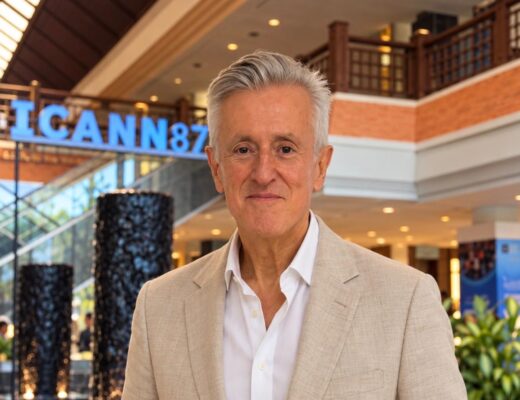
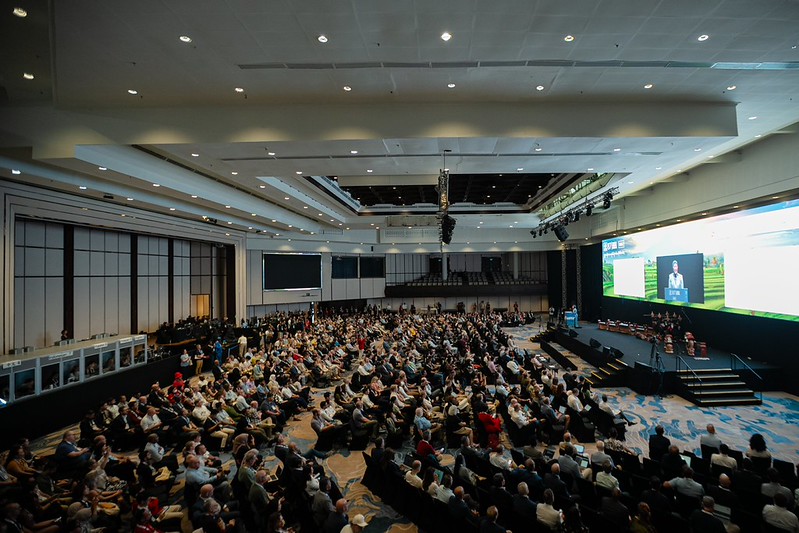
Bali, Indonesia | By Nivaldo Cleto*
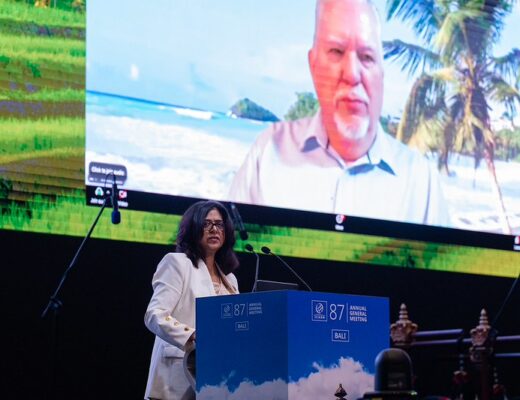
Professor Hartmut Glaser, Executive Secretary of the Brazilian Internet Steering Committee (CGI.br), was honored at the ICANN 87 opening ceremony with the 2026 Dr. Tarek Kamel Award for Capacity Building. The recognition highlighted his longstanding contribution to the development of the Brazilian Internet and his efforts to broaden the participation of people from different sectors in Internet governance.[1]
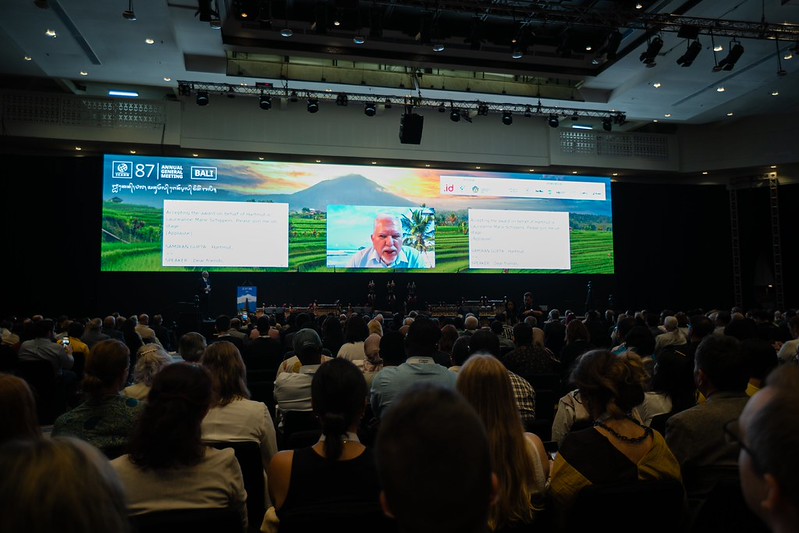
Announcing the award, ICANN Board Chair Tripti Sinha emphasized Glaser’s contributions to the development of the .br domain, CGI.br and NIC.br, as well as his role in establishing the Latin American and Caribbean Internet address registry, LACNIC. The award particularly recognized his commitment to preparing others to participate in discussions and take on responsibilities within the international community.[2]
Read more about Hartmut Glaser’s recognition
New Domains Enter a New Phase
At the opening, ICANN leadership highlighted the 1,615 applications submitted in the 2026 round of new generic top-level domains (gTLDs). These proposals involve new domain name extensions, including those associated with brands, communities and names in different writing systems. The publication of the applications does not mean they have been approved: all requests must still go through the stages established under the program.[3]
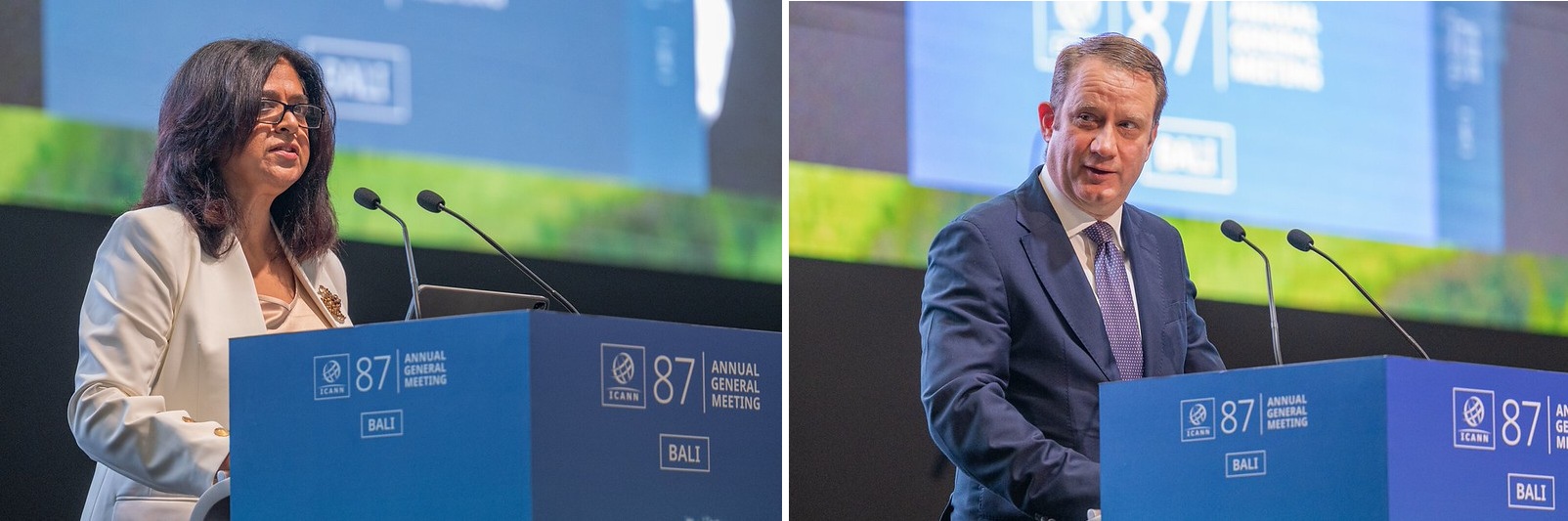
Tripti Sinha and ICANN President and CEO Kurtis Lindqvist called for cooperation among governments, businesses, civil society and experts. Lindqvist stressed the need to turn community decisions into tangible results, with clearer priorities, budgets and implementation responsibilities..
Combating Fraud and Protecting Rights
During a session of the Commercial Stakeholder Group (CSG), participants discussed proposals to investigate other domains associated with an account when a substantiated abuse report has been filed. This work is part of a Policy Development Process (PDP). Those responsible for the process clarified that such additional investigations do not remove the existing obligation to respond promptly to the abuse initially reported.[4]
A session devoted to human rights revealed differing views on the safeguards needed to prevent unjustified blocking. Noncommercial representatives advocated objective criteria, privacy protection and mechanisms to challenge decisions. Other participants called for equal attention to the harm suffered by scam victims. Discussions also addressed possible controls on automated domain registration tools, without assuming that every instance of bulk domain registration is malicious. The proposals remain under discussion.
An Internet That Supports Different Languages
The session on Universal Acceptance (UA) addressed a practical problem: valid domain names and email addresses are still rejected by some systems when they contain certain characters or use newer domain extensions. Participants presented 47 guidelines, along with examples of university training programs, public service adaptation and the promotion of local writing systems. The stated priority was to move beyond awareness-raising and toward practical adoption.[5]
Tools for Security and Brand Protection
The CSG also featured a proposal to improve the Centralized Zone Data Service (CZDS). The idea is to provide already authorized users with daily files containing only changes to zone data, making monitoring easier and reducing redundant processing. Another presentation examined the integration of traditional domain names with alternative naming systems, with a focus on security and consistency across records. Both topics require further technical work and follow-up discussions.[6]
*Nivaldo Cleto is the representative of the Business Sector – Internet Users on the Brazilian Internet Steering Committee (CGI.br) and a member of the ICANN Business Constituency.
Photos courtesy of ICANN Photos
Footnotes